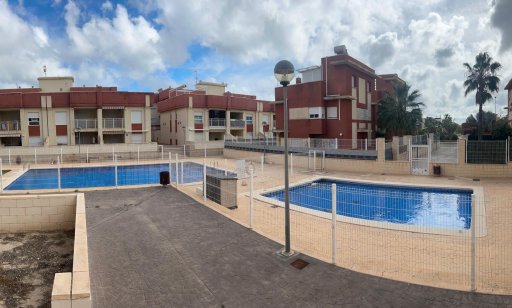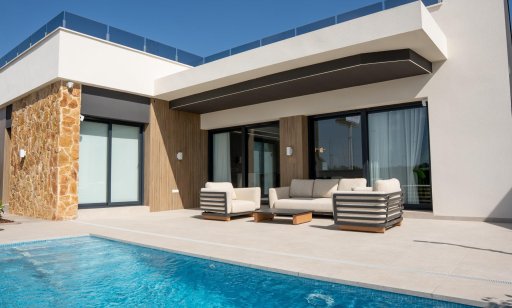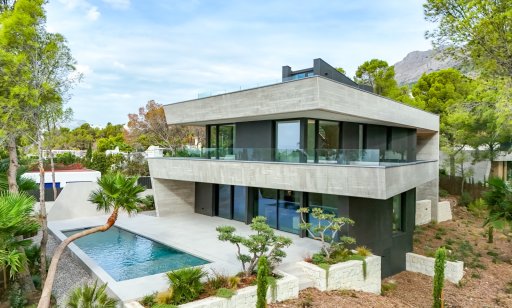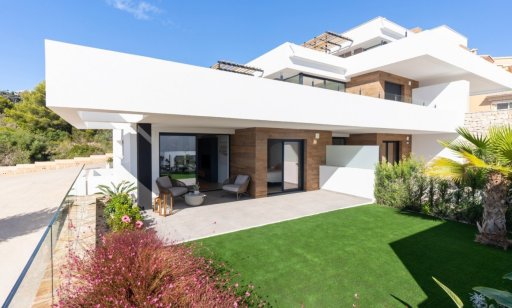



Everything Is Legal … Or Is It? Why a Swimming Pool Can Be Missing from the Spanish Land Registry
“But we have all the paperwork!”
This is something we hear quite often when helping people sell a property in Spain.
An owner is convinced that everything is legal. They have documents, plans, licences and even a folder dedicated to the work. So, when we explain that something is missing from the Land Registry, it can come as a complete surprise.
And it doesn't necessarily mean that the owner has done anything wrong.
Let me give you a real example we came across when listing a property for sale.
The swimming pool that wasn't on the paperwork
When we visited the property, we noticed that the swimming pool was a much more recent addition than the original house.
As part of our listing process, we asked the owners to provide the property documentation. They gave us the original purchase deeds from around 20 years earlier, along with a separate folder labelled “Swimming Pool”.
Inside that folder were plans, the project, building quotations and the Town Hall licence.
The owners genuinely believed this meant everything had been dealt with.
However, when we checked the Nota Simple from the Land Registry, there was no swimming pool mentioned in the property description.
That was the first indication that something was missing.
A Town Hall licence and Land Registry registration are two different things
This is where the confusion often starts.
A Town Hall licence relates to the authorisation for the works. However, obtaining that licence does not automatically mean that the completed swimming pool has been formally declared before a notary and registered at the Land Registry.
These are separate steps.
You can have a licence for the works and still find that the Land Registry description of your property hasn't been updated.
This distinction is important whether you are selling your property or buying one.
Can an existing swimming pool be registered by age?
Depending on the circumstances, there can be different routes for dealing with an unregistered swimming pool.
In our experience, one possibility is to register an existing pool by proving its age, provided it meets the applicable planning and legal requirements.
This normally involves obtaining a technical report or certificate from an architect describing the completed swimming pool and establishing its age.
For more recently built pools, the applicable planning regulations and documentation need to be checked. The relevant Town Hall licence may also be required.
Where the property forms part of a community of owners, community approval may also need to be obtained. This is something we always investigate rather than assume.
Important: The requirements depend on the property's location, planning history, age and circumstances. A pool being old enough for one registration procedure does not automatically mean it can be registered in every case.
How we resolved this particular case
Fortunately, this pool was old enough for us to pursue the registration-by-age route.
We coordinated the process with an architect, who prepared the necessary age report.
We also contacted the community administration to establish when the next Annual General Meeting (AGM) was scheduled. The pool needed to be put forward for approval, with that approval recorded in the meeting minutes and confirmed by a certificate from the community.
There was one complication: the next AGM wasn't due for another eight months.
Rather than allowing this to stop the property sale, we prepared all the documentation that could be completed in advance, ready for the remaining steps once community approval was obtained.
And this is where careful conveyancing and communication become particularly important.
Could the property still be sold before the pool was registered?
Yes, in this case it could.
The sale was able to proceed without waiting eight months for the AGM, but the buyer had to be fully informed.
We explained exactly what had and hadn't been done, why the owners had believed the pool was already legalised, what remained outstanding and how we intended to resolve it.
We also explained that community approval was not guaranteed. In our experience, approval is obtained in the vast majority of cases, and speaking to the community administration beforehand can often give us an indication of how likely it is. However, an informal indication is not the same as formal approval.
The buyer needs to understand this before proceeding.
How did we protect the buyer and seller?
We agreed a retention of €2,500 from the seller's proceeds on completion.
This figure was calculated using our experience and recent invoices for the different professionals and procedures involved.
The retained funds were there to cover the outstanding costs once the community approval had been obtained and the registration could be completed.
Once all the work and invoices had been dealt with, any remaining balance would be refunded to the seller.
This meant the sale could complete while there was still a clear, documented plan for resolving the outstanding issue.
What does it cost to register a swimming pool?
There isn't one fixed price. The costs depend on the property, the documentation required and the professionals involved.
In this case, the costs included:
- Architect's report and technical documentation.
- Notary fees for the declaration of the completed construction.
- Land Registry fees to register the swimming pool.
- The applicable tax on the notarial declaration.
For properties in the Valencian Community, the relevant tax is generally Actos Jurídicos Documentados (AJD). The applicable rate and taxable base must be checked at the time of the declaration, as tax rules can change.
For example, the tax is not simply calculated on the overall value of the property. The construction value used for the declaration is relevant.
The outcome? The pool was approved and registered.
The community eventually approved the swimming pool, the outstanding formalities were completed and the pool was successfully registered.
The sale hadn't been delayed, the buyer had been informed throughout, and the seller's retained funds covered the agreed outstanding costs, with any unused balance due back to the seller.
It was a good example of why identifying a problem is only part of the job. Understanding the available route to resolve it, explaining it properly and managing the process makes all the difference.
What should you check before selling or buying a property in Spain?
If your property has a swimming pool, extension, glazed terrace, garage conversion or any other addition, don't assume that having a folder of paperwork means everything is registered.
Check the property description on the Nota Simple and compare it with what actually exists.
If something is missing, establish:
- Whether the works had the relevant Town Hall authorisation.
- When the works were completed.
- Which registration or legalisation route may be available.
- Whether community approval is needed.
- What technical, notarial, tax and Land Registry costs may arise.
And if you are buying, make sure you understand any outstanding issues before committing to the purchase.
Frequently asked questions
Does a Town Hall licence mean my swimming pool is registered at the Land Registry?
No. A Town Hall licence authorises works subject to its conditions, but it does not automatically update the Land Registry. A separate formal declaration and registration process may be necessary.
How can I check whether my swimming pool is registered?
Obtain an up-to-date Nota Simple and check the property description. If the pool is not mentioned, further investigation may be needed. The Nota Simple is an important starting point, but it is not a substitute for checking all the relevant documentation.
Can I register an old swimming pool in Spain?
In some circumstances, yes. Registration by age may be possible if the applicable legal and planning requirements are met and sufficient evidence of the pool's age and completion can be provided. An architect or other qualified professional can advise on the technical documentation required.
Do I need community approval to register a swimming pool?
If your property is part of a community of owners, you should check the community rules and the relevant requirements. Approval may be needed, and it should not be assumed that it will automatically be granted.
Can I sell my Spanish property if the swimming pool isn't registered?
It may be possible, depending on the circumstances. The issue must be properly investigated, disclosed to the buyer and dealt with through an agreed arrangement. A retention from the seller's proceeds can sometimes be used to cover outstanding costs, but this needs to be agreed and documented appropriately.
Who pays to register an unregistered swimming pool?
This is normally negotiated between the buyer and seller. In our example, the seller's proceeds were retained at completion to cover the outstanding work and costs.
Need help checking your property paperwork?
At Casas Connect, we don't just put properties on the market. We look at the documentation, identify potential issues and help our clients understand what needs to be done.
Whether you are thinking of selling or buying on the Costa Blanca, getting the paperwork checked early can save unnecessary stress later.
Casas Connect – Connecting People & Property, Perfectly.
 Back
Share


Contact us
Latest Knowledge Hub
Capital Gains Tax When Selling in Spain Read more
Buying a Property in Spain? Don't Inherit the Previous Owner's Debts
Read more